Guide library
All guides page 3
Showing guides 37–54 of 79. Looking for something specific?Search from the first page or browse by topic.
What is a drum bus, and why does it make drums sound like one kit?
Eight separate drum recordings become one instrument the moment a single processor acts on all of them at once.
What is a limiter? Peak control without wrecking the mix
A limiter is a compressor with one instruction: nothing gets past this ceiling. What matters is how it achieves that.
What is a noise gate? How gating works and when to use it
A gate is a switch driven by level. It removes silence between sounds — it cannot remove noise underneath them.
What is headroom, and why do you need it?
Headroom is room to work. Without it, every processor you add is already fighting the ceiling.
What is mastering, and what is a master?
A master is the finished file the world hears. Mastering is the small, careful stage that gets a mix there.
What is mixing? The job, explained simply
Mixing is five decisions repeated: how loud, where, what tone, how dynamic, how far away.
What is phase, and what is phase cancellation?
Two copies of the same sound, slightly misaligned, subtract instead of adding. That is the whole problem.
What is saturation, and how do you actually use it?
Saturation makes something louder and denser without making its peaks higher. That is why it works where volume does not.
Sound design explained: turning a sound into the right sound
Sound design is not making weird noises. It is deciding what a sound needs to do, then getting it to do that.
What to pay attention to when mastering
Mastering is mostly checking. These are the things worth checking, in the order that catches problems earliest.
When to sidechain kick and bass — and when not to
Sidechain the bass to the kick when they genuinely collide. If they do not collide, you are adding a rhythmic effect and calling it a fix.
When to use send channels instead of inserts
An insert replaces the signal. A send copies it. That difference decides which one you should be using.
Why you need a template (and what belongs in it)
A template is not about saving ten minutes. It is about not spending your best hour on routing.
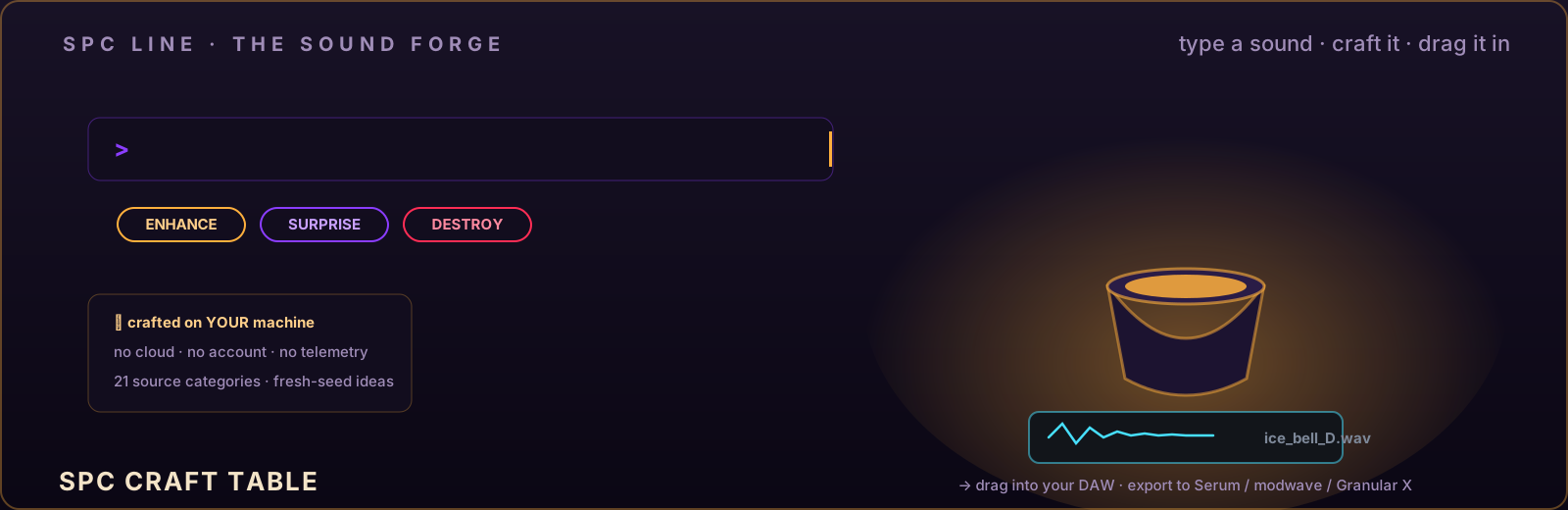
Introducing SPC Craft Table
Type a sound, craft it locally, drag it into your DAW — prompt A/B alchemy, Enhance and Surprise, and wavetable exports for your favourite synths.
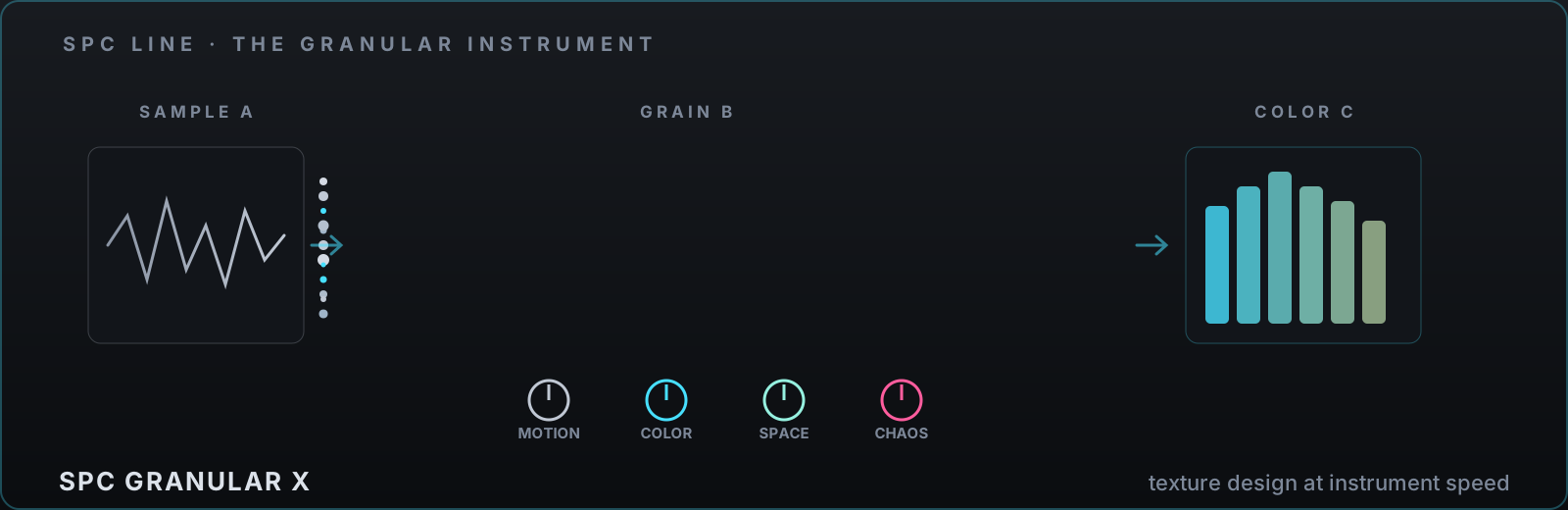
Introducing SPC Granular X
Texture design at instrument speed: a playable granular signal path, drag-and-drop modulation and a Performance Safe Mode on the Graphite Console.
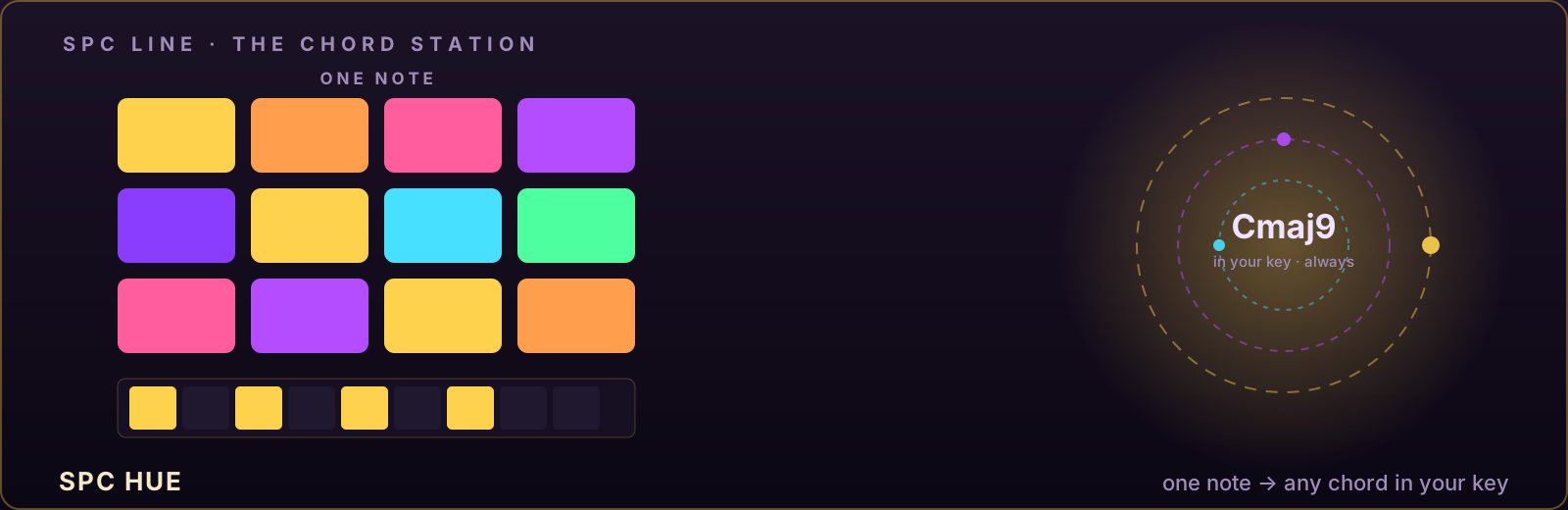
Introducing SPC Hue
One note becomes any chord in your key: chord pads, a radial wheel, a progression generator and a full sampler on the luxury glass console.
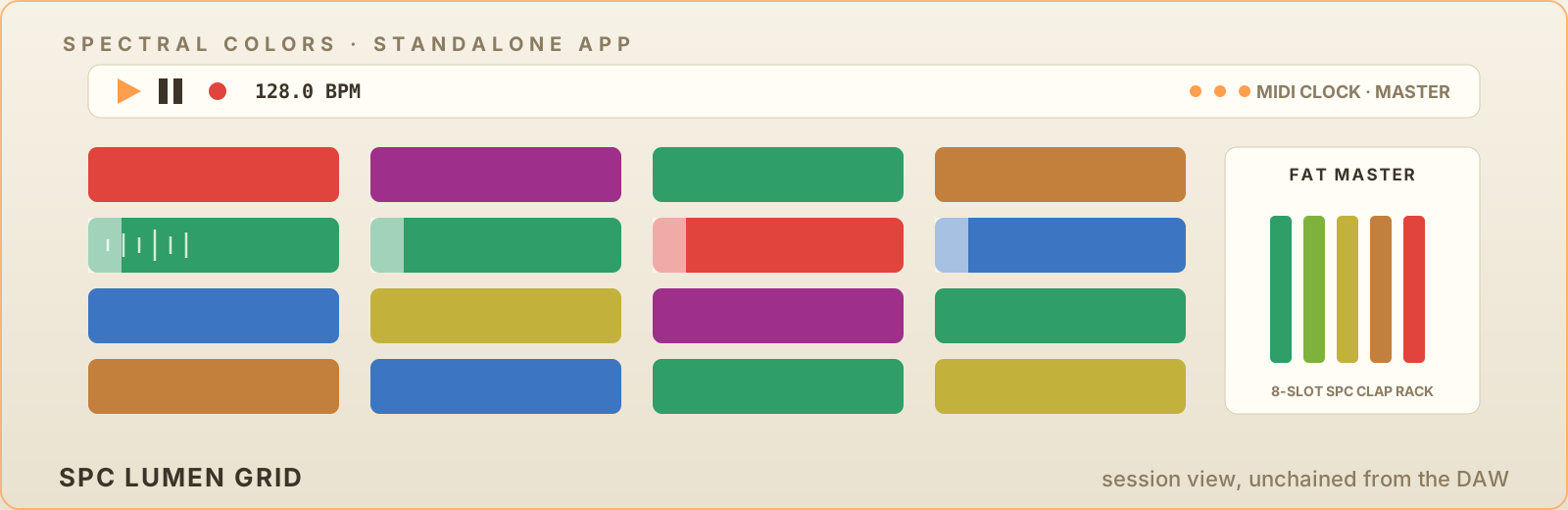
Introducing SPC Lumen Grid
Session view, unchained from the DAW: a standalone clip launcher with multi-device audio, SPC CLAP racks, MIDI Clock and drag-to-FL stems.
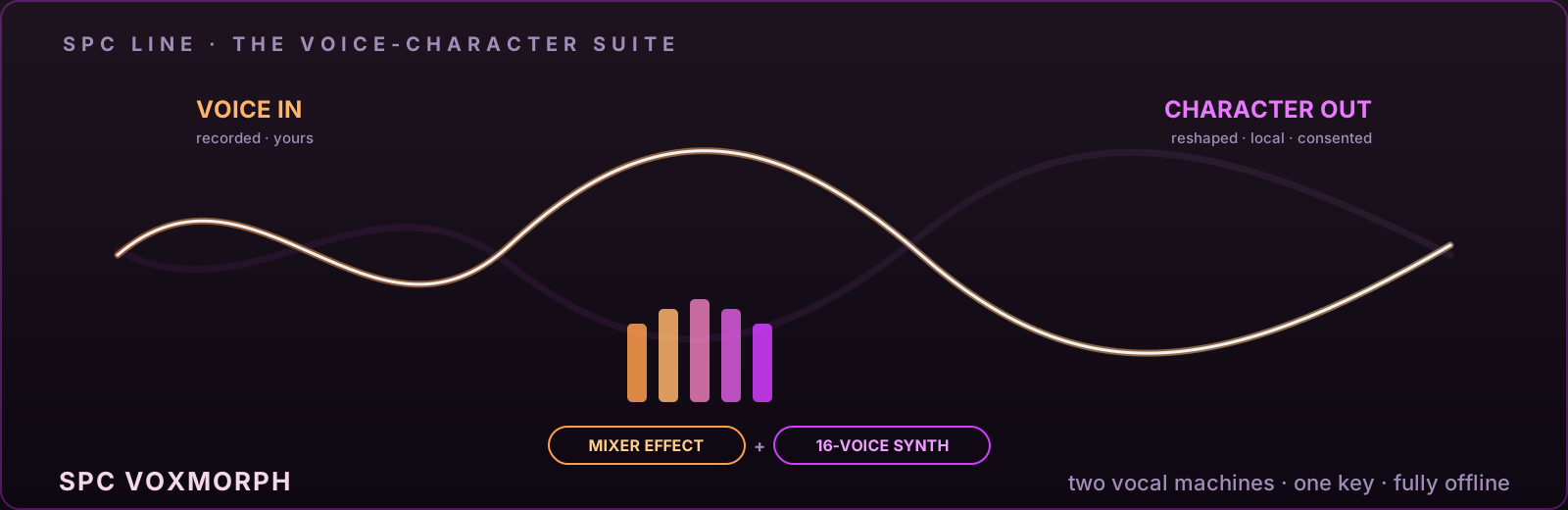
Introducing SPC VoxMorph
Two vocal machines, one key: a voice-character mixer effect and a 16-voice vocal synth, with an optional consent-gated AI Morph — fully offline.